Swap a Golf MK5 GTI TFSI engine into a Golf MK3#
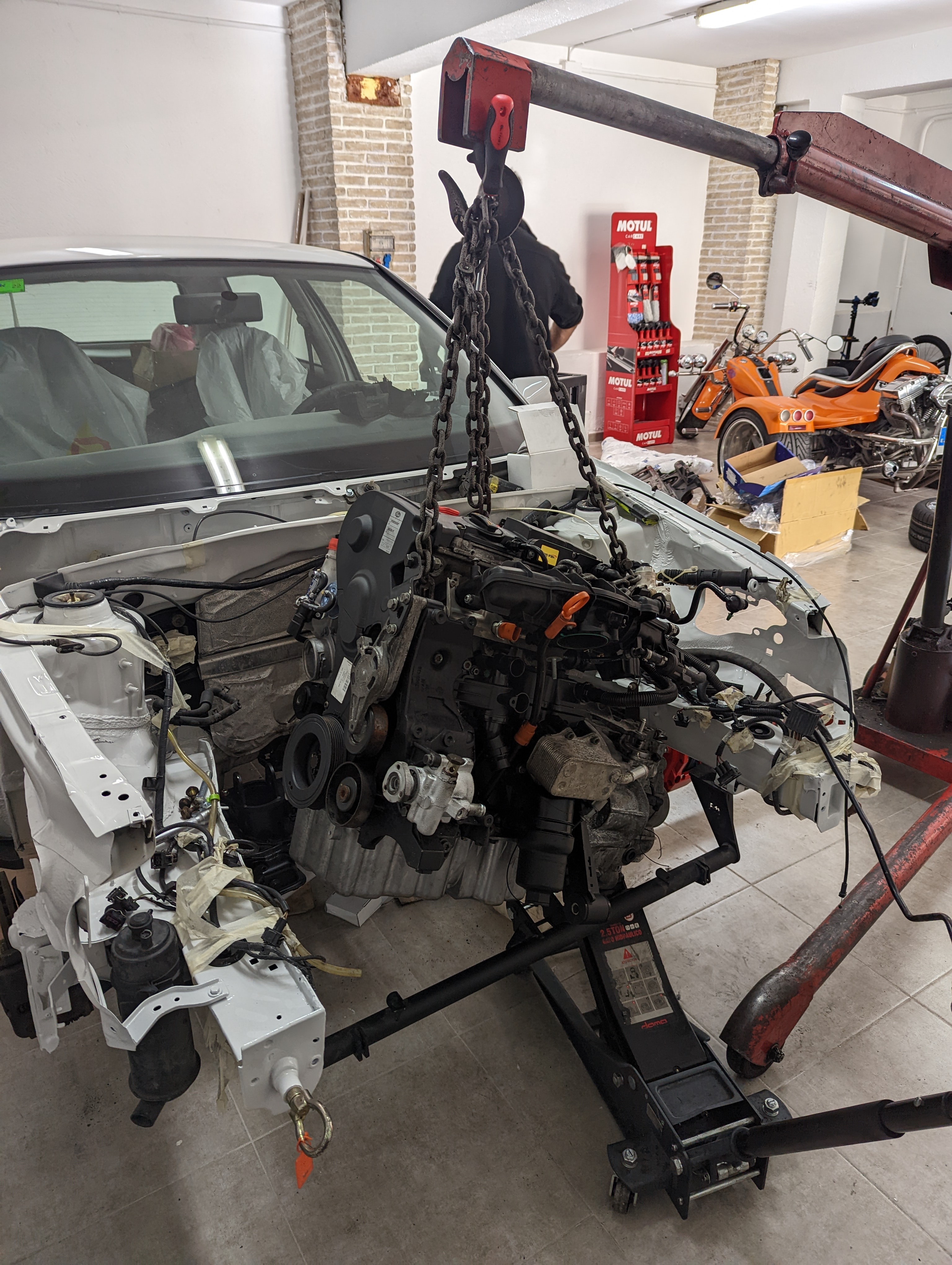
This website documents the full project of swapping a Golf MK5 GTI engine (engine code BWA) into a Golf MK3 GTI. It also explains how to make the car road legal in Spain, along with every challenge that had to be overcome to make it all work. There is plenty of custom fabrication involved in fitting the engine and the pipework around it, but by far the most complex part is the electrics.
Two different wiring harnesses have to work together. On the engine side, a Golf MK5 GTI (BWA) wiring harness has to be adapted to work inside a Golf MK3 — different ABS, speed sensors, and so on. The original Golf MK3 instrument cluster is also kept, so engine speed, VSS and other signals need to be adapted to make sure it keeps displaying the right information.
This means the original Golf MK5 engine wiring harness has to be modified to start the engine in a Golf MK3. The exact modifications required depend on the approach followed.
In this build, no fuse box from the Golf MK5 was used — the wiring harness instead contained three fuses in its place. That approach allowed for a clean separation between the engine and body electrics. As mentioned above, several signals still needed adapting to keep using the original instrument cluster: engine speed, VSS and oil temperature. Other signals, such as coolant temperature, can be connected directly.
Some of the engine wiring harnesses sold for this type of swap drop support for the V50 (coolant circulation pump), since this pump is only needed once the engine is switched off and the turbocharger is still hot. In this swap, the V50 pump was retained and is properly used to cool the turbocharger down after the engine is switched off.
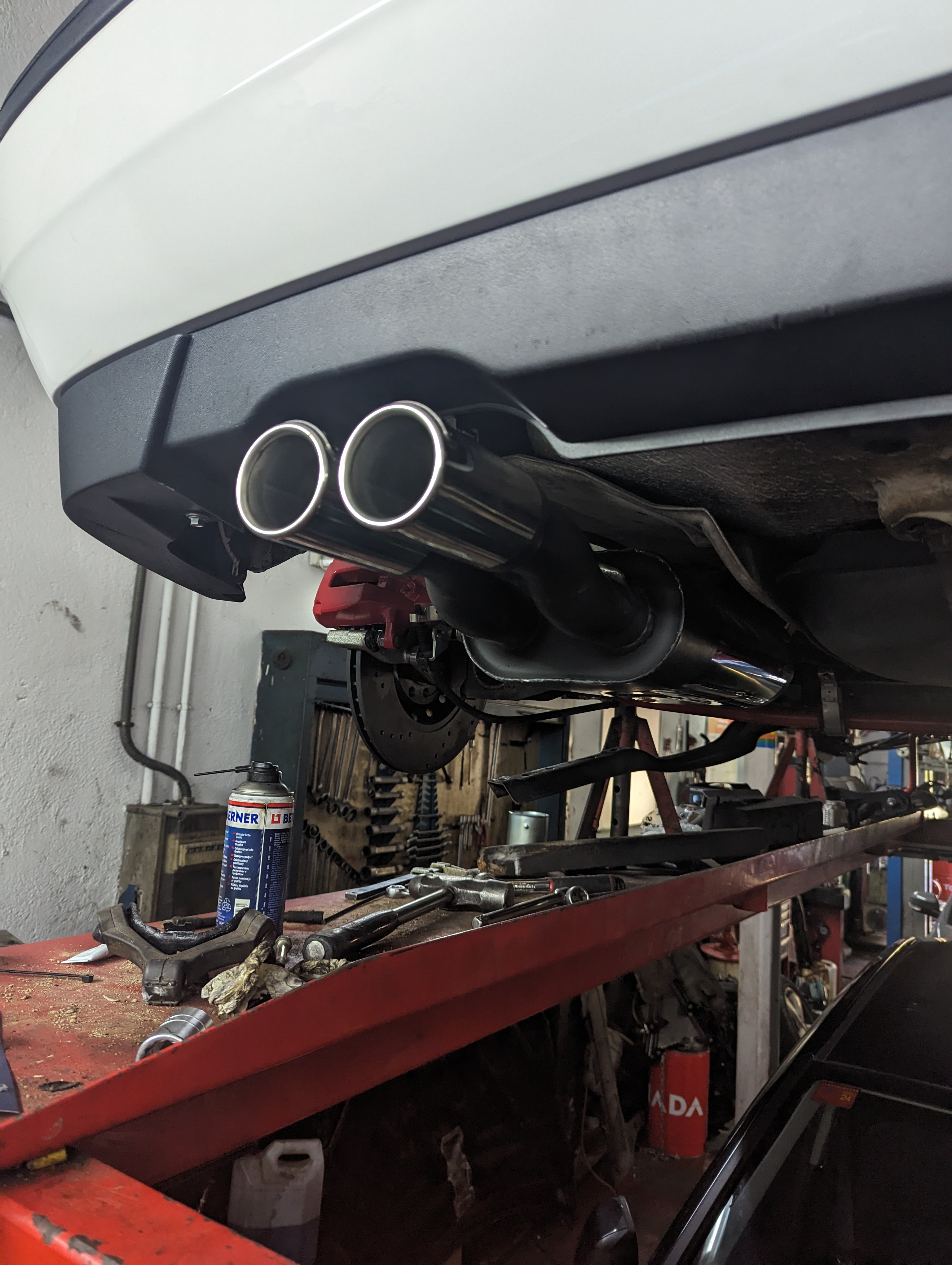
Another aspect to consider is the exhaust. The short version: a Golf MK5 BWA exhaust has to be adapted to fit a Golf MK3, and this has to be done in a way that keeps the new exhaust certified for a Golf MK5 BWA engine even though it now fits a Golf MK3. As you can imagine, the exhaust is custom made and requires a great deal of fabrication.
Last but not least is the certification process. As will be explained, every one of these changes has to be made road legal: certified by an engineer, verified by a certification body, and finally approved through a MOT-like inspection.